

SGLang Architecture
SGLang isn’t just a domain-specific language (DSL). It’s a complete, integrated execution system with a clear separation of functionality:
Here are some frontend primitives for creating multi-step workflows:
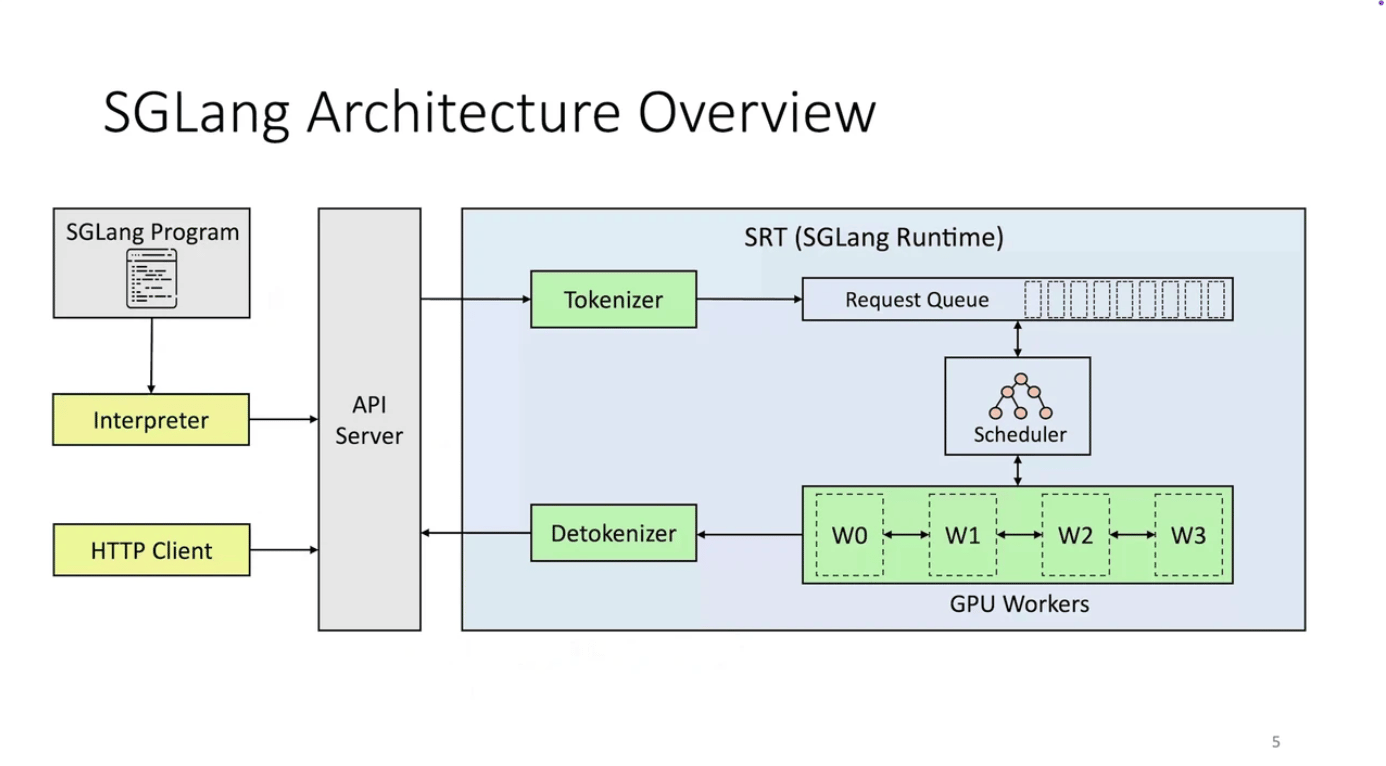
For more details, see this article.
You can see the final code sample here.
Tutorial
Step 1: Project Setup
Create the project structure:Step 2: Configure Dependencies
The VLM is Qwen3-VL-30B-A3B-Instruct-FP8, which requires significant GPU memory. Thecerebrium.toml defines the environment, hardware, and scaling settings. This configuration uses an ADA_L40 GPU and includes:
- Hardware settings for GPU, CPU, and memory allocation
- Scaling parameters to control instance counts
- Required pip packages: SGLang, flashinfer (the chosen backend), and PyTorch
- APT system dependencies
- FastAPI server configuration for hosting the API
cerebrium.toml with:
Step 3: Implement the Ad Analysis Logic
Cerebrium does not enforce any special class design or application architecture. Write Python code as if running locally. The code below sets up the SGLang Runtime Engine (Backend) with FastAPI and loads the model on container startup. The first request incurs a model load, but subsequent requests execute instantaneously. In yourmain.py file:
fork, which runs many prompts in parallel and brings the results together. This enables many simultaneous evaluations with no increase in total latency. The results are then structured in a specific format for the response.
Step 4: Deploy Your Application
Run:
Example Response
fork() for parallel processing and SGLang’s built-in output control.
You can find the complete code for this tutorial in our examples repository.